


- Home
- What to do?
- Routes
- Ruta "Los Molinos" y Molinos de agua y de rabil
Ruta “Los Molinos” y Molinos de agua y de rabil
- Hiking
- Morcín
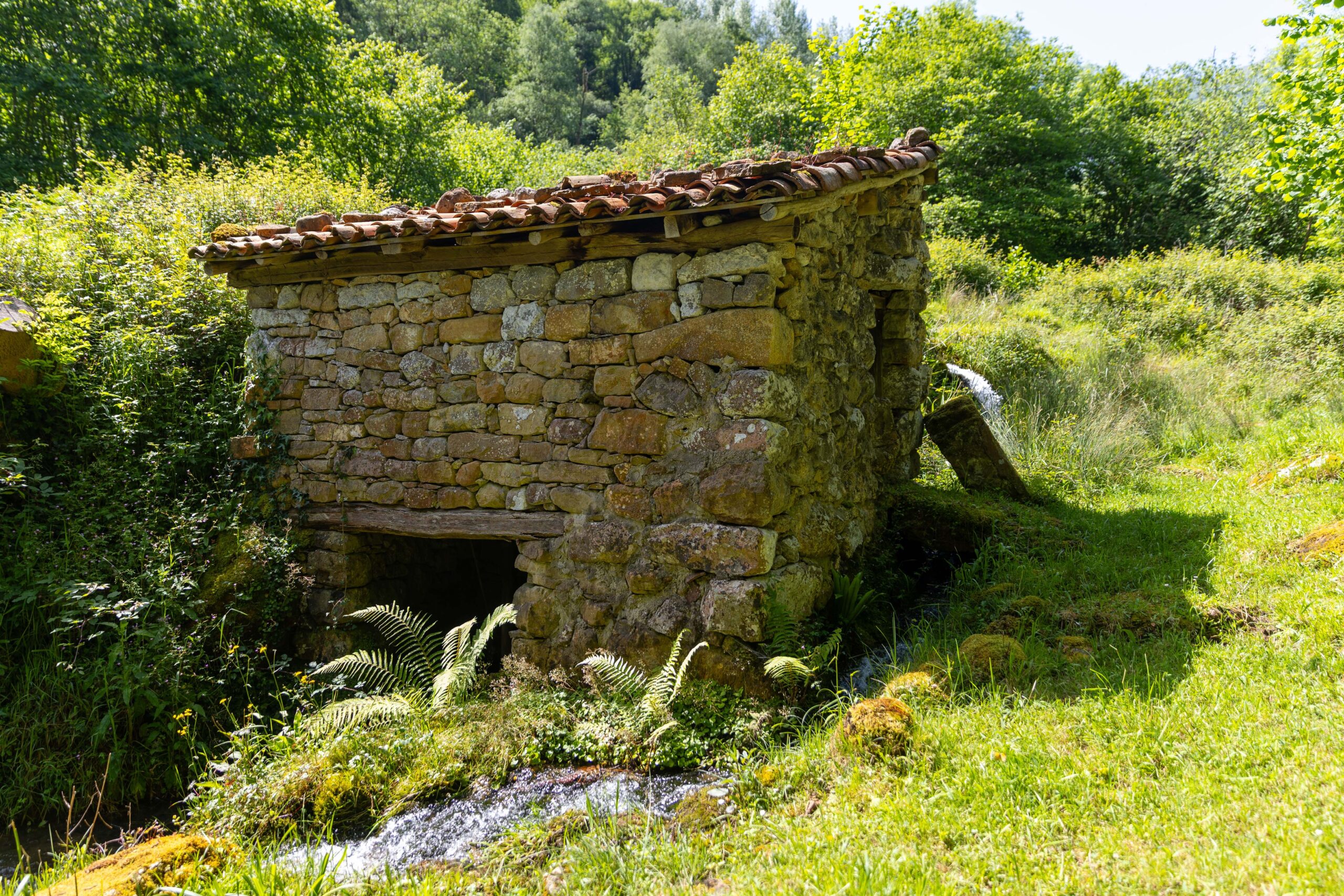

Between Busloñe and La Carbayosa, the Mills Route uncovers an intimate landscape of streams, forests, and traditional heritage. A circular route where water, stone, and rural memory are the main protagonists.
The “Mills” and Water & Rabil Mills Route is one of the most interesting proposals in Morcín to get closer to the council’s ethnographic heritage. Its main appeal lies not only in walking through a quiet natural environment but in discovering the role ancient mills played for generations in the daily lives of the villages. Here, the trail functions as a small journey through rural memory, following the water’s course and the traces of traditional uses.
The route takes place around Busloñe and La Carbayosa, within the council of Morcín, and is set up as a circular path of about 8 kilometers. The elevation gain and loss is around 312 meters, with an altitude ranging from approximately 289 to 595 meters. It is a medium-difficulty route, suitable for those accustomed to walking, especially due to the combination of trails, damp areas, inclines, and rural paths.
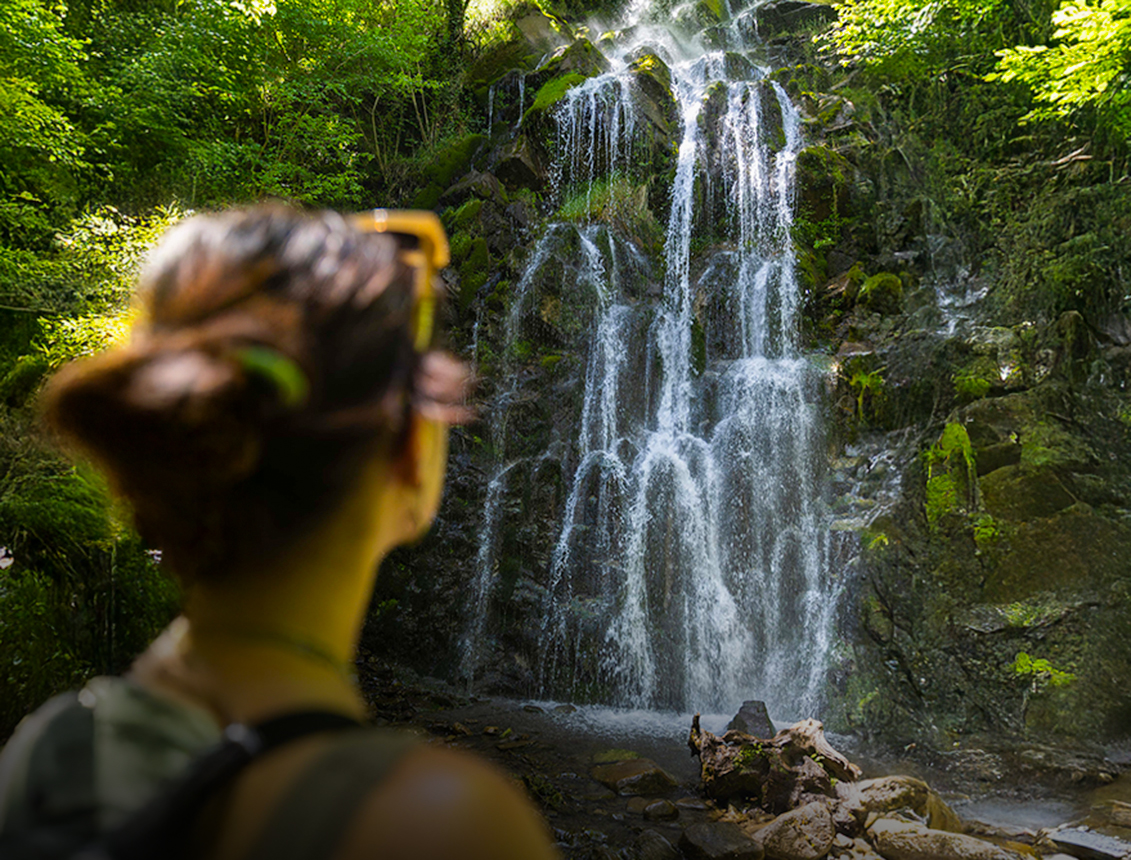
From the start, the route enters a landscape closely linked to water. Streams, riverside vegetation, and tree-lined paths create a fresh and secluded atmosphere. Here, the interest lies in the details: the sound of water, stone walls, remains of traditional constructions, and small paths that connected rural centers with workplaces.
One of the great values of the itinerary is the presence of water mills, fundamental elements of the traditional Asturian economy. For centuries, these mills ground grain using the force of water and served as spaces for work, gathering, and community life. The route allows you to observe how these structures integrated into the landscape, always close to the riverbed and adapted to the natural terrain.
In addition to water mills, the route includes the interest of rabil mills, linked to specific traditional rural uses. These elements add extra value to the itinerary, helping to better understand the diversity of hydraulic devices and mechanisms that were part of peasant life. It is not just about seeing ruins, but imagining the functioning of a territory organized around water, work, and local production.
As the route progresses, the trail alternates between forest sections and open zones with rural paths. This variety makes the route entertaining and ever-changing. In some sections, the dampness of the environment and the proximity of the streams may make it advisable to proceed with caution, especially after rainy days.
Passing through the area of Busloñe reinforces the rural character of the route. The villages and farmhouses maintain that close relationship between housing, paths, meadows, and mountains that defines the traditional landscape. Walking here allows you to understand how the centers were connected to each other and to nearby natural resources, especially water, essential for moving the mills.
The La Carbayosa area adds a new landscape nuance to the tour. The itinerary moves between hillsides and vegetation, offering a complete view of the surroundings. Being a circular route, the return allows you to continue discovering new corners until you return to the starting point.
The approximate duration of the route is around 5 hours and 52 minutes, although it can vary. It is best not to treat it as a race, but as a path to stop, look, and understand. Its value lies in the combination of nature, heritage, and a calm reading of the landscape.
The “Mills” and Water & Rabil Mills Route is ideal for those seeking an experience in Morcín more linked to rural heritage than high mountain climbing. It is a perfect route to enjoy a green, silent environment full of small stories, highly recommended for those who want to walk through Asturias with a more cultural, ethnographic, and leisurely perspective.
Información de interés
- Distance: 8.05km
- Positive elevation: 312m
- Negative elevation: 312m
- Maximum altitude: 595m
- Minimum altitude: 289m
- Time: 5 horas 52 minutos
Rutas relacionadas

 4.4h
4.4h Medium